
What Actually Happens When You Call Nixon’s 24/7 Emergency Electrician
 Dylan Lott
Published 24 August 2026
Dylan Lott
Published 24 August 2026
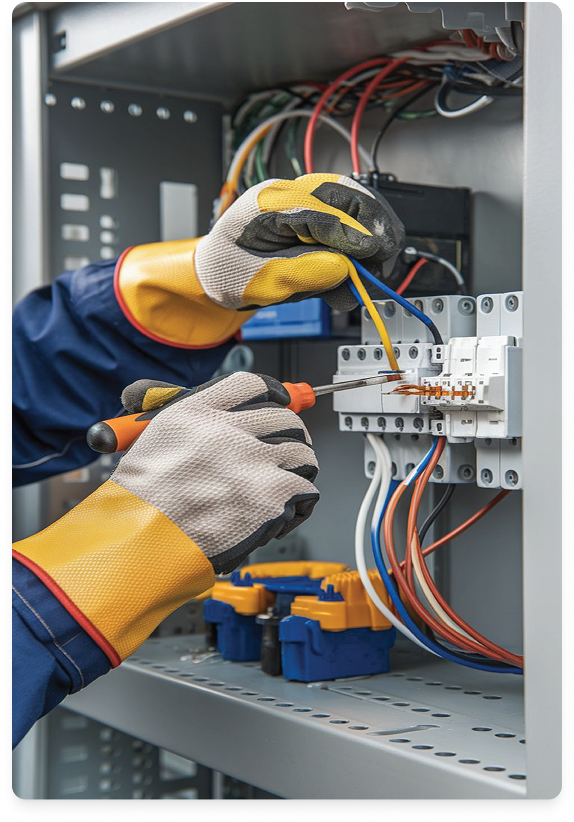
Calling for an emergency electrician is already stressful enough without having to worry about what you’re actually signing up for.
Here's the short version. When you call us, we ask a few questions to work out how urgent it is and whether there's anything you should do right now. We give you an arrival time, isolate any danger first, diagnose the fault, and then quote you a fixed price for the repair before starting work. Nothing gets charged that you haven't agreed to first.
Step 1: Give Us a Call
Call (08) 9726 2240. Outside our standard hours (Monday to Friday, 8am to 4pm), that goes through to our after-hours service.
You don't need to diagnose anything before you ring. But the more you can tell us, the better we can help, so it's worth having these ready:
- Your address, and whether there's anything tricky about access like locked gate, dogs, or an unlit driveway
- What you're seeing, hearing or smelling. Burning smell? Buzzing? Sparks? Scorch marks?
- Whether the whole street is out, or just your place
- What happened right before it started. Was there a storm, an appliance switched on, water getting in
- Whether anyone has had a shock, or anything is wet near live electrical fittings
If someone has been injured or you can see fire, hang up and call 000 first. If a powerline is down, call Western Power on 13 13 51.
Step 2: We Work Out How Urgent it Really is
Sometimes the most useful thing we can do is talk you through making it safe and book you in for the morning.
If your fault can be safely isolated at the switchboard and there's no burning smell, no water in the electrics and no exposed wiring, waiting until standard hours is often the sensible call, and it costs you less. We’re not in the business of charging callout fees for the sake of it.
If it is urgent, we'll tell you what to do while you wait. That might mean switching power off at the main switch if it's safe to reach, keeping everyone away from the switchboard, and not resetting anything.
You'll get an arrival estimate on that call. We’ve got locations in Bunbury and Busselton, so wherever you are in the South West we’re not far away.
Step 3: Safety First
We won’t start fixing things the moment we walk in. First we’ll make it safe.
That means isolating the affected circuit or the whole installation, confirming what's actually live, and removing the immediate hazard. If there's arcing, scorching or water in the switchboard, everything stays off until we’ve established what's going on.
Only once the danger is contained do we start diagnosing.
Step 4: Finding the Fault
There's a difference between the symptom and the cause.
A safety switch that keeps tripping is the symptom. The cause might be a failed appliance, moisture in an outdoor circuit, a damaged cable, or a deteriorating connection at the board.
We’ll trace it properly rather than guessing, so you don’t end up having to make the same call again in a fortnight.
We’ll explain whatever we find in simple terms. If you want to know more, ask away. Our team are used to explaining things to people who don't work in the trade, and we won't make you feel silly for asking.
Step 5: You Get a Price Before Any Work Starts
Once we’ve identified the fault, we’ll quote for the repair. Work doesn't begin until you've said yes.
We use per-task pricing rather than an open-ended clock, which means the number you're given is the number for the job. If something else comes up mid-repair, you'll be told and asked before anything additional is done.
You're also free to say "just make it safe tonight, quote me for the rest." That's a completely normal choice, and it leads to the next step.
Step 6: Make Safe Now, Permanent Repair Later (if possible)
Some faults are fixed on the spot, but not every emergency gets fully resolved at 2am.
Others get made safe with a follow-up booked during standard hours to complete the permanent repair. That's often the better outcome: it removes the danger immediately without rushing a proper fix in the dark, and complex work usually needs parts and daylight.
If that's the plan, we’ll let you know before going ahead.
How Emergency Pricing Works
Emergency and after-hours attendance costs more than a booked weekday job. Electricians called out at night, on weekends or on public holidays attract penalty rates and minimum engagement periods under their employment conditions, and someone has to be rostered and available whether the phone rings or not.
What you should expect from any electrician, including us:
- The attendance cost explained on the phone, before anyone is dispatched
- A fixed price for the repair before work begins
- No additional work carried out without your say-so
- A clear answer if you ask what something costs
Ask on the phone, and you'll get a straight answer before we get in the van.
Call NIXON Today
We’ve been working across the South West for more than 30 years, and we’re ready to help homeowners, tenants, property managers, and businesses with 24/7 emergency electrical service.
Call us now on our emergency line, 24/7 — (08) 9726 2240
Frequently Asked Questions
What should I say when I call an emergency electrician?
Give your address and any access issues, describe exactly what you're seeing, hearing or smelling, say whether the whole street is affected or just your property, mention what happened immediately beforehand, and say straight away if anyone has had a shock or if water is near live fittings.
How much does an emergency electrician cost in Australia?
Emergency callouts are typically structured as an attendance or call-out fee covering travel and initial diagnosis, followed by a price for the repair itself. After-hours, weekend and public holiday attendance costs more than standard hours because of penalty rates and minimum engagement periods. Ask for the attendance cost on the phone before dispatch, and a fixed repair price before work begins.
Will I be charged before I know the price?
You shouldn't be. At NIXON, the repair is quoted and approved before work starts, and nothing additional is carried out without your agreement.
Can an emergency electrician fix everything on the night?
Not always. Some faults are repaired on the spot; others are made safe with a follow-up appointment during standard hours to complete the permanent repair, particularly where parts or more extensive work are involved.
Is it worth calling after hours, or should I wait until morning?
Call and ask. If the fault can be safely isolated and there's no burning smell, water in the electrics or exposed wiring, waiting is often the sensible and cheaper option, and we'll tell you if that's the case. Burning smells, scorching, sparks, water in the switchboard or a safety switch that won't reset shouldn't wait.