How Western Australia’s South West Storm Season Trips Switchboards (and When It’s Actually an Emergency)
 NIXON
Published 27 August 2026
Updated 22 September 2026
NIXON
Published 27 August 2026
Updated 22 September 2026
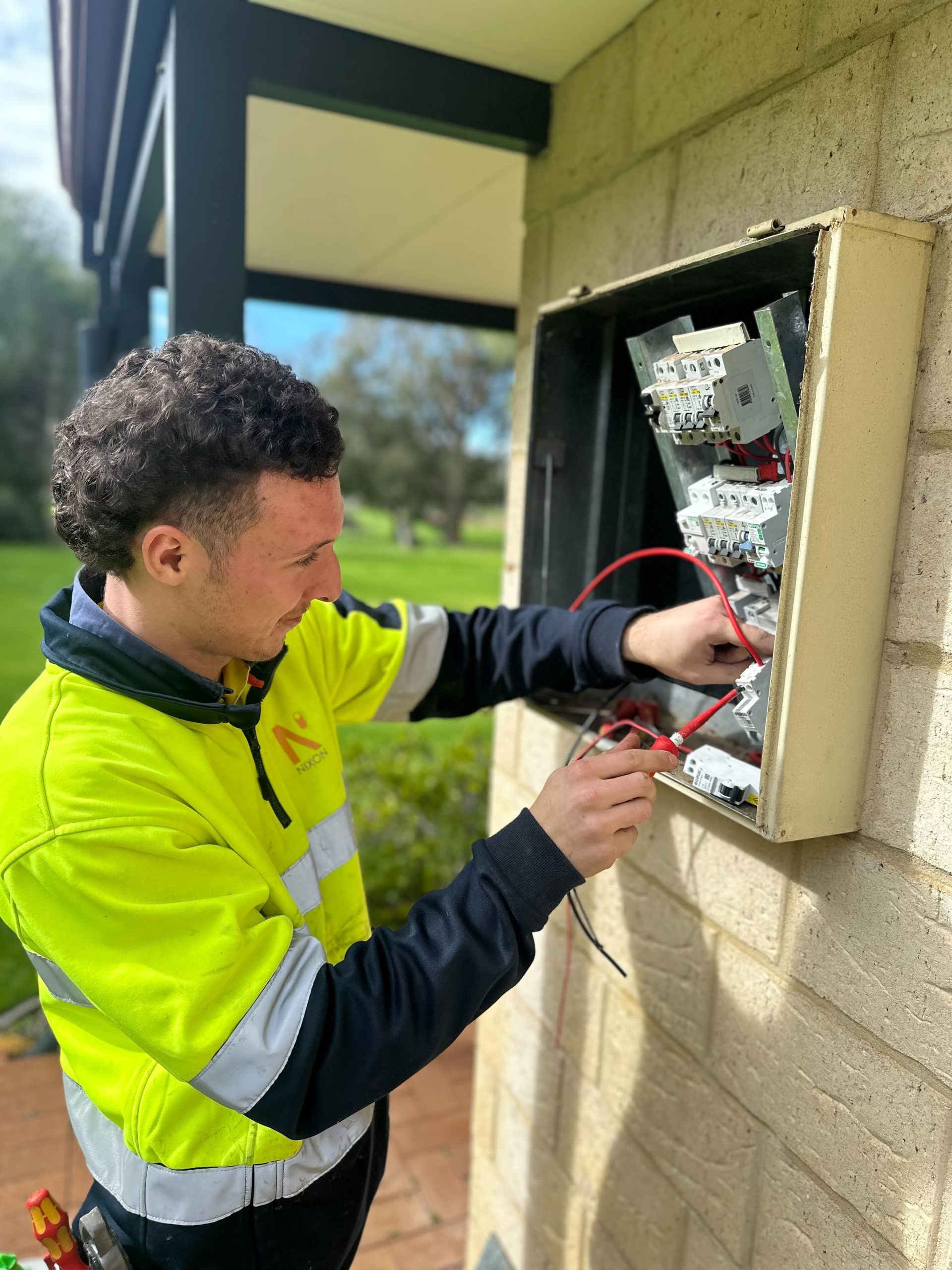
Some storm damage can wait until Monday. Some can't.
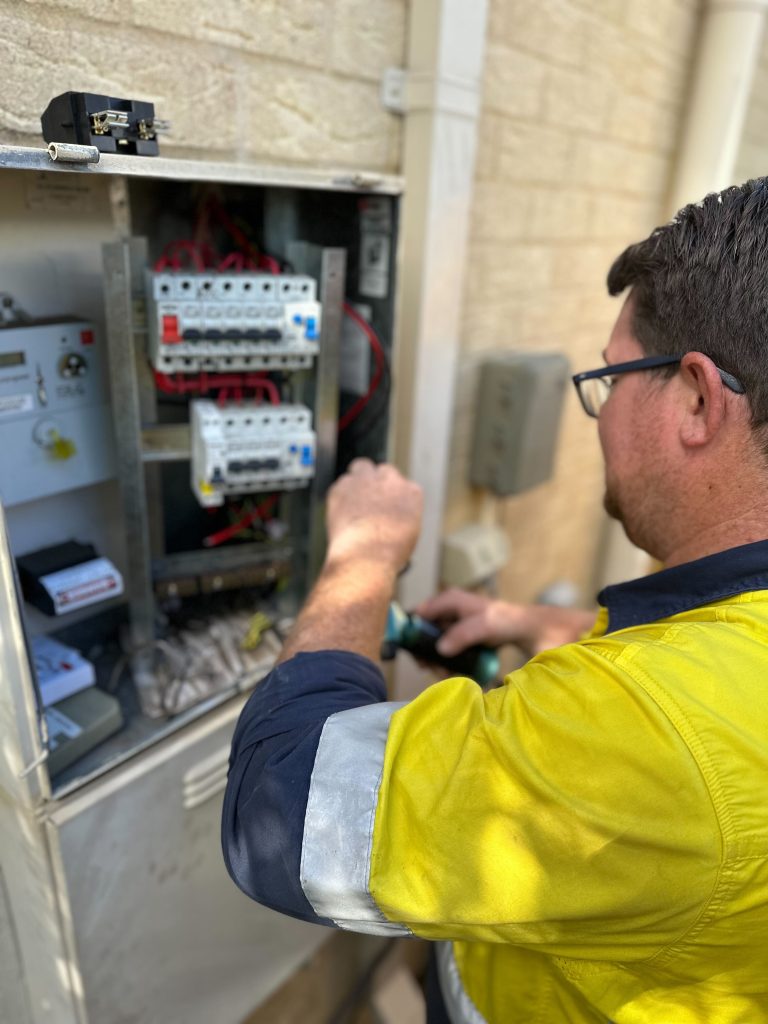
If you can smell burning near your switchboard or a power point, if you can see exposed or damaged wiring, or if water is getting into your meter box, switchboard, power points or light fittings, treat it as an emergency. Keep everyone well clear, don't touch the switchboard, and call a licensed electrician straight away.
If a powerline is down on your property or across the street, assume it’s live and stay at least eight metres back. Call 000 first if anyone is hurt or in immediate danger; otherwise call Western Power on 13 13 51.
Everything else usually falls into "annoying, but it can wait for daylight." The trick is knowing which in the middle of a cold front when the house is dark and the switchboard won't behave.
Why South West Storms are Hard on Switchboards
Winter here isn't gentle. Cold fronts roll in off the Indian Ocean from about May through September, bringing wind, driving rain and, every few years, something genuinely severe.
We got a good reminder of that earlier this year in May with a storm the Bureau of Meteorology called the strongest system to hit the state's south west in almost five decades. Around 160,000 Western Power customers lost power at least once, and a fair few of those calls were about switchboards.
The three things that usually cause switchboard failures are:
- Voltage surges: Lightning is the obvious one, but not the common one. More often it's a fault out on the network, like a branch across a line, a damaged pole, or supply dropping out and coming back. Those swings can travel into your home and damage appliances and trip protection at the board.
- Water where it shouldn't be: This is the big one in a coastal region. Horizontal rain finds gaps that vertical rain never will: older meter boxes on exposed western walls, perished seals, cracked conduit, outdoor power points with a broken flap, roof leaks tracking down into a light fitting. Water and electricity together will trip a safety switch.
- Overload: When power comes back after an outage, everything starts at once. Heaters, the dryer, the fridge and freezer both pulling hard to recover, hot water, a house full of devices on charge. On an older board with limited circuits, that surge of demand is often what finally tips it over.
Is it Your House, Or is it the Whole Street
Before you touch anything, look outside.
Are your neighbours dark?
Are the streetlights out?
If the whole street is out, it's a network fault, and there's nothing at your switchboard to fix. Report it to Western Power on their 24/7 faults line, 13 13 51, and check their outage map for a restoration estimate.
If your neighbours have power and you don't, the fault is on your side of the meter. That's when an electrician is the right call.
What the switch that tripped is telling you
Circuit breakers and fuses protect your wiring from overload and short circuits. They're designed to prevent electrical fires, not electrocution. RCDs, or safety switches, cut the supply immediately when they detect current leaking to earth, and they're the only device designed to protect people. In WA you're required to have at least two fitted at the main switchboard, and larger homes may need more.
So a breaker tripping after you turned the heater on points one way. A safety switch tripping during driving rain points another, usually moisture in a circuit. And a safety switch that won't reset at all is telling you a fault is still live.
That one isn't a mystery to be solved with repeated flicking.
Call Now, Or Wait Until Morning?
Call an electrician now if:
- There's a burning smell, or scorch marks or discolouration around the switchboard, a power point or a switch
- You can hear buzzing, crackling or arcing from the board
- Water is visibly getting into the meter box, switchboard, a power point or a light fitting
- There's exposed, damaged or hanging wiring anywhere on the property
- A safety switch trips again immediately every time you reset it
- A safety switch won't reset at all
- A power point, switch or plug feels hot to touch
- Part of the house has power and part doesn't, with no obvious tripped switch
- Your hard-wired smoke alarms have stopped working after the storm
Call Western Power on 13 13 51 (or 000 if anyone is in danger) if:
- A powerline is down, sagging, or has a tree or branch across it
- A power pole is damaged or leaning
- The whole street is out
It's reasonable to wait for normal hours if:
- The safety switch reset cleanly and has held since
- You traced it to one appliance, unplugged it, and everything has been stable
- Power is on and working normally, and you just want the board checked over
When in doubt, ring. A phone call costs nothing, and a licensed electrician can usually tell from a two-minute conversation whether it's something that can safely wait.
After the Power Comes Back On
Turn things back on gradually rather than all at once, and check your fridge and freezer are running. Test your safety switches by pressing the test button on each. If pressing it doesn't cut the power, the device is faulty and needs a licensed electrician.
If the same circuit has now tripped three storms running, that's not bad luck. That's a fault nobody has found yet.
And never keep resetting a switch that keeps tripping. It's protecting you from something, and forcing it back on doesn't fix the fault.
NIXON: 24/7 Emergency Electricians Across the South West
Nixon has been working across the South West for more than 30 years, with branches in Bunbury and Busselton covering the surrounding towns. We run a 24/7 emergency electrical service — nights, weekends and public holidays included — because storms rarely happen when it’s convenient.
If you're dealing with any of the emergency signs above, call us:
- NIXON Bunbury — 11 Dodson Rd, Glen Iris WA 6230 — (08) 6288 7152
- NIXON Busselton — 102 Strelly Street, Busselton WA 6280 — (08) 6288 7154
You'll get a straight answer about what's wrong, per-task pricing so you know the cost before we start, and a team that turns up when we say we will and leaves your place the way we found it.
Frequently Asked Questions
Why does my switchboard keep tripping when it rains?
Almost always moisture getting into a circuit. The safety switch is detecting current leaking to earth and doing its job. Repeated tripping in wet weather needs a licensed electrician to find the entry point.
Is a tripped switchboard an emergency?
Not usually on its own. It becomes an emergency if there's a burning smell, scorching, buzzing or arcing from the board, visible water in the switchboard, exposed wiring, or if the safety switch won't reset or trips again immediately every time.
The power's out after a storm. What should I do first?
Check whether your neighbours and the streetlights are out too. If they are, it's a network fault: report it to Western Power on 13 13 51 and check their outage map. If your neighbours have power and you don't, the fault is inside your property, and you need an electrician.
What do I do if I see a fallen powerline?
Assume it's live. Don't go near it, touch it, or touch anything in contact with it. Stay at least eight metres back, keep others away, and call Western Power on 13 13 51 or 000 in a life-threatening emergency.
How many times can I reset a tripped safety switch?
Once. If it holds, you're likely fine. If it trips again straight away, stop and call an electrician. It’s a sign the fault is still there, and continuing to reset it removes the protection without fixing anything.
Do you do after-hours callouts in Bunbury and Busselton?
Yes. We run a 24/7 emergency electrical service across the South West, covering nights, weekends and public holidays for both homeowners and businesses.